
Why Do They Call It a Skid Steer?
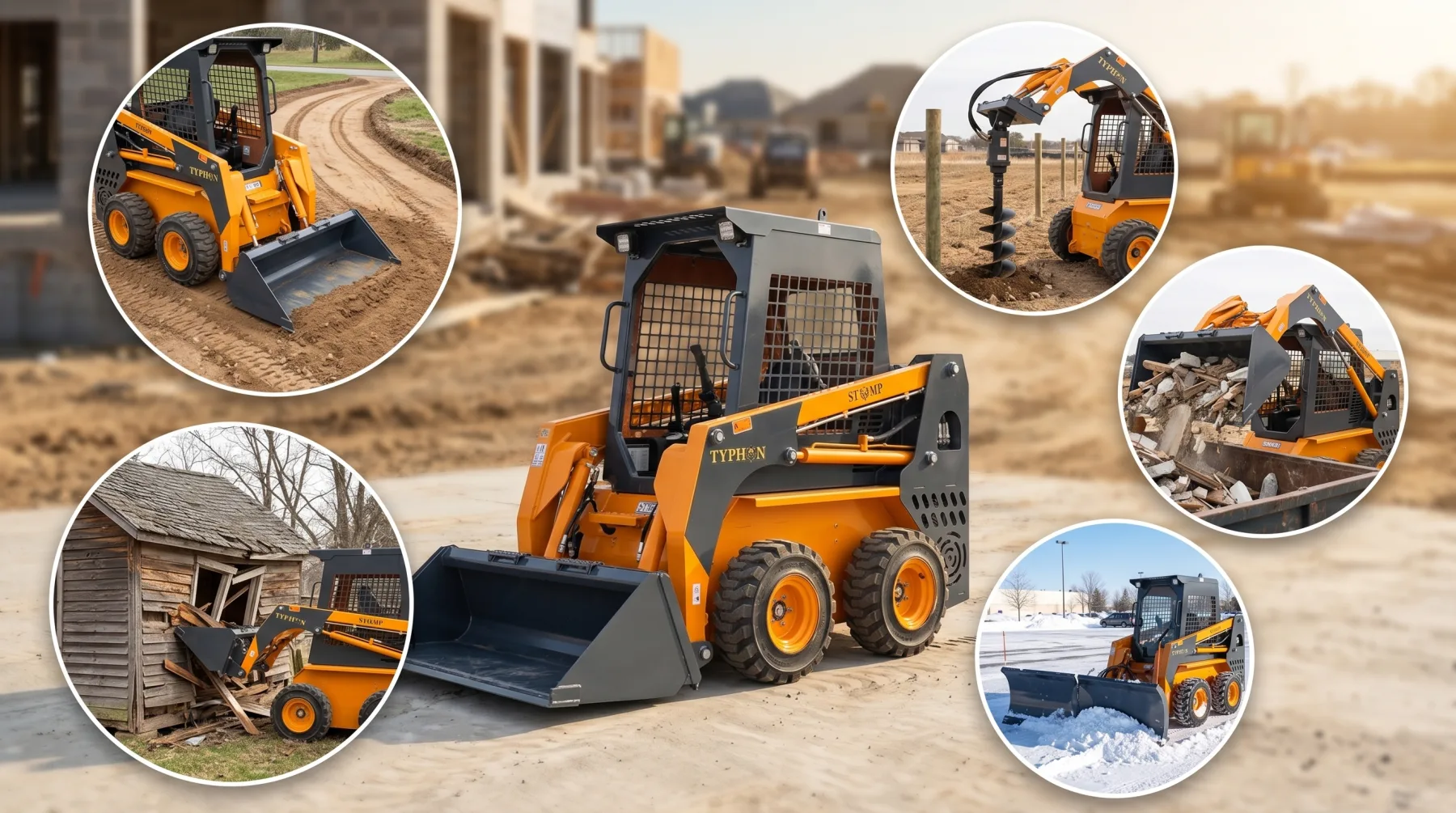
The skid steer is one of the most recognizable machines on any jobsite, yet its name often gets used without anyone stopping to ask where it comes from. Contractors, landscapers, and equipment buyers operate these machines every day, swapping attachments and powering through tasks, while the term “skid steer” simply becomes part of the background vocabulary of the trade. The name, however, is not arbitrary. It describes something specific and clever about how the machine moves, and understanding that detail reveals a great deal about why the machine works so well in the places it does.
This guide is written for contractors, landscapers, construction business owners, equipment buyers, and anyone curious about how compact equipment earns its name. We will trace the origin of the term, explain the steering mechanism that gives the machine its identity, and explore how the “skidding” action both enables remarkable maneuverability and creates a few trade-offs worth understanding. We will also look at the difference between wheeled and tracked models, the way skidding affects the ground beneath the machine, and how knowing all of this helps an operator work faster, smarter, and with less wear on both the equipment and the jobsite. By the end, the name will make complete sense.
The Origin of the Name
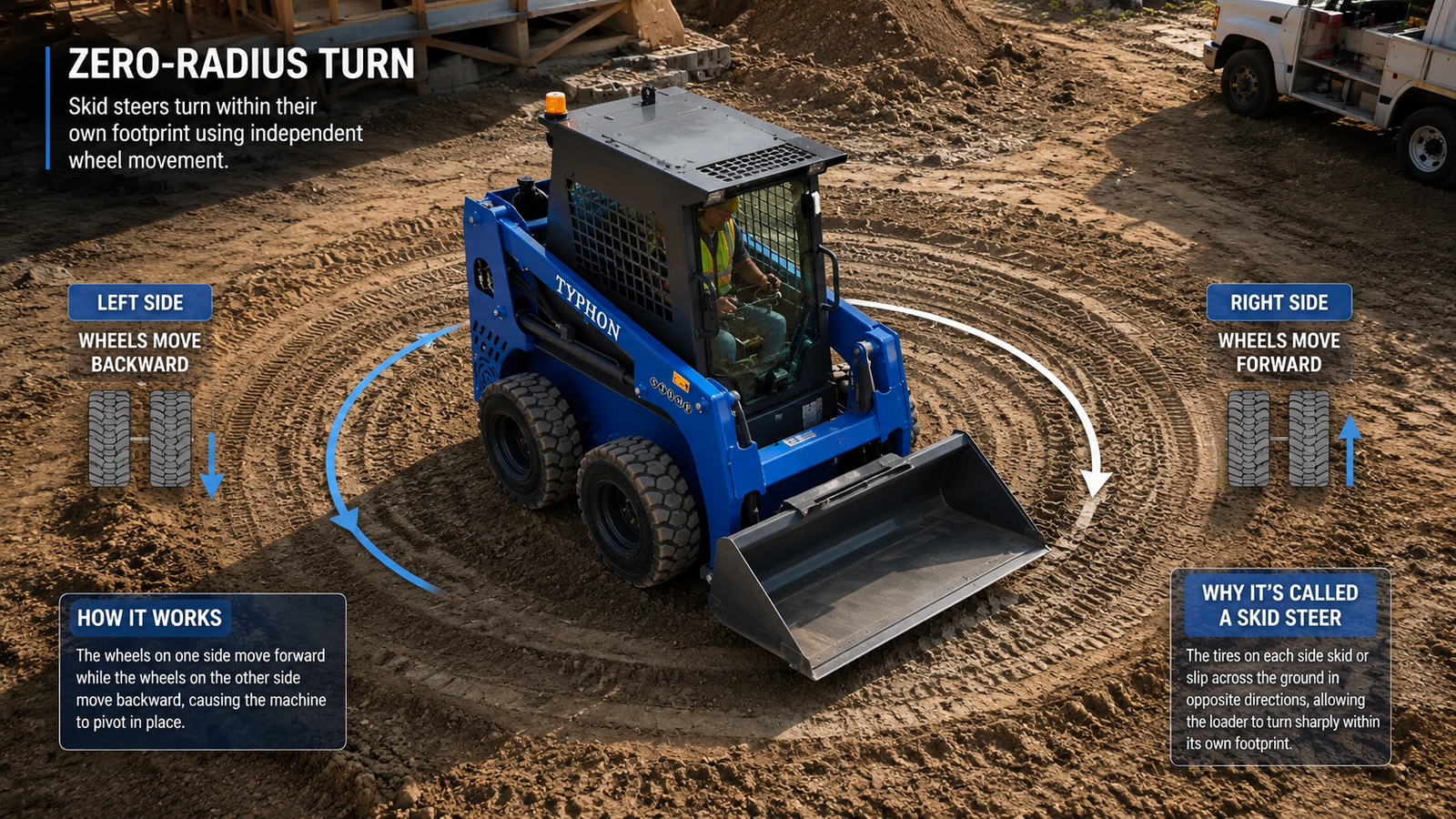
Every piece of equipment carries a name that came from somewhere, and in the case of the skid steer, that origin is refreshingly literal. The machine is called a skid steer because of the way it steers itself: by skidding. Unlike a car or a conventional tractor that turns its wheels to change direction, a skid steer keeps all of its wheels or tracks fixed in a straight, forward-facing position. It changes direction not by angling anything, but by driving the wheels on one side at a different speed, or in a different direction, than the wheels on the other side. The result is that the machine pivots while the wheels effectively drag, or skid, across the ground.
The confusion many people have is assuming the name refers to some kind of slipping or loss of control, as if “skid” implied a problem. In reality, the skidding is the entire point of the design and the source of its greatest strength. The term simply names the mechanical reality of how the machine turns. When operators understand that the skid is intentional and engineered, rather than accidental, the whole machine starts to make more sense, and so do its habits on the ground.
This clarity matters in a practical way. An operator who grasps why the machine is named what it is approaches its movement with the right expectations, anticipating how it will behave in a turn rather than fighting against it. That understanding is the foundation for using the machine well, and it begins with a closer look at the steering system itself.
How the Steering Mechanism Actually Works
To appreciate the name fully, you have to understand what is happening beneath the operator when the machine turns. A skid steer uses what is known as differential steering, which means the two sides of the machine operate independently of one another. The left wheels or tracks are driven as one unit, and the right wheels or tracks are driven as another. By varying the speed and direction of these two sides, the operator controls every movement the machine makes, from a gentle curve to a tight pivot in place.
The limitation this design overcomes is the generous turning room that conventional steered machines require. A vehicle that turns by angling its front wheels needs space ahead and to the side to swing through an arc. On a crowded construction site, inside a barn, or between two finished structures, that space often does not exist. The skid steer eliminates the requirement entirely. When the operator drives one side forward while holding the other still, or runs the two sides in opposite directions, the machine rotates within its own footprint, the wheels or tracks skidding sideways across the surface to allow the turn.
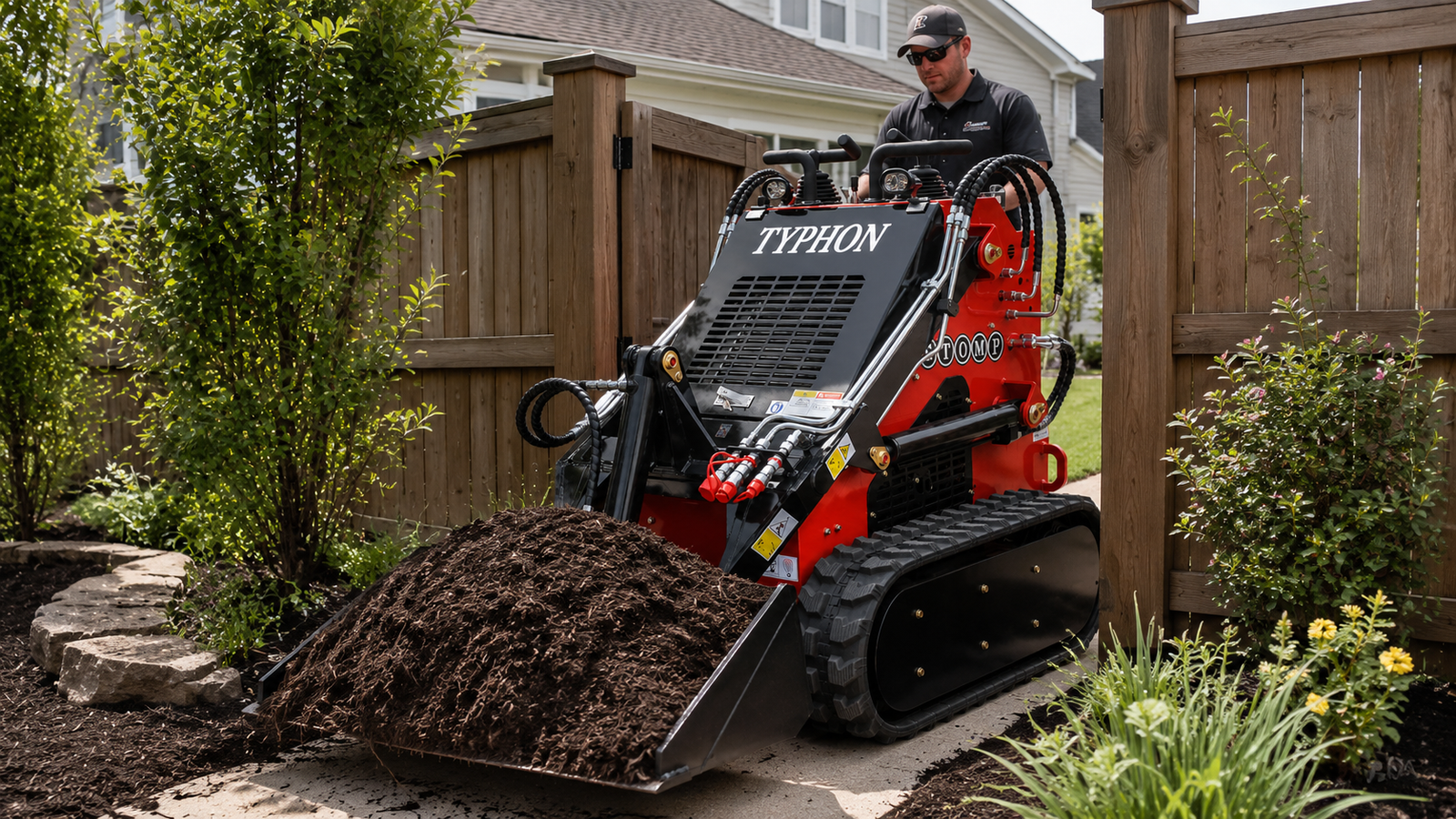
This is precisely where the real-world business impact begins to show. Because the machine can turn so sharply, it works productively in confined spaces where larger equipment would be forced to back up, reposition, and try again. An operator can spin to face a new task, line up a load, or reverse direction without the slow, repetitive maneuvering that wastes time and invites collisions. That efficiency, repeated across hundreds of movements in a workday, translates directly into faster job completion and lower labor costs. The mechanism that gives the machine its name is also the mechanism that gives it its value, and that connection explains why the term has endured for so long.
Why the Name Stuck
Names in the equipment world come and go, with marketing departments constantly inventing new labels and categories. Yet “skid steer” has remained the standard term for decades, used by manufacturers, dealers, operators, and rental yards alike. The reason it stuck is that it describes the machine accurately and memorably, capturing the single most distinctive thing about how it works in two simple words.
The challenge with many equipment names is that they describe a brand rather than a function, or they grow vague over time as machines evolve. “Skid steer” avoids that trap because the skidding action is fundamental and unchanging, regardless of which manufacturer builds the machine or how many features get added. Whether the machine rolls on wheels or tracks, whether it is a compact model or a larger one, it still steers by skidding. The name therefore remains true to every version of the machine ever built, which is exactly why it has resisted replacement.
For business owners and buyers, this consistency carries a quiet benefit. When you shop for equipment, request a rental, or talk to a dealer, the term communicates a precise category of machine that everyone in the industry understands the same way. There is no ambiguity about what you are asking for, which makes purchasing, renting, and discussing equipment far simpler. A name that has stayed accurate and universally recognized for generations is a small but genuine advantage in an industry where clear communication saves time and prevents costly misunderstandings. Understanding why the name fits so well also prepares you to understand what that skidding action does to the ground.
How Skidding Affects Surfaces and Operation
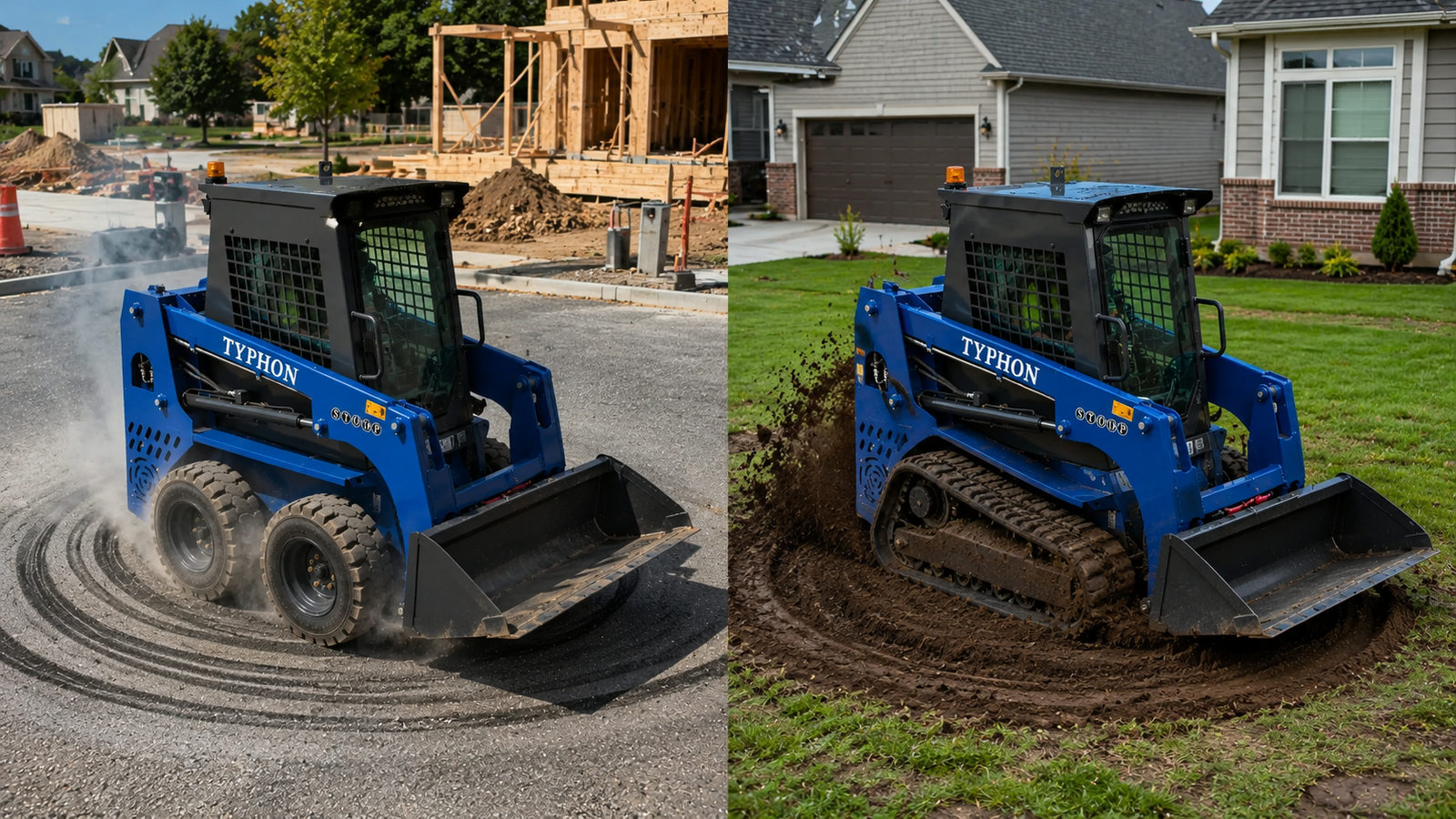
The same skidding action that makes the machine so nimble also has a direct effect on the surface it works across, and this is where operators need to pay attention. Every time the machine turns, the wheels or tracks drag laterally rather than rolling cleanly, and that dragging scrubs against the ground. On loose or unfinished surfaces this matters little, but on finished or delicate ground, the skidding can leave marks, tear turf, scuff pavement, or churn up loose material in ways that create extra work.
The problem this introduces is most pronounced when operators turn aggressively or pivot in place on sensitive surfaces. A sharp, full-speed spin grinds the wheels or tracks hard against the ground, and on a finished lawn, a fresh asphalt lot, or a smooth concrete pad, that grinding can cause damage that turns into a repair and a frustrated client. The very maneuverability that makes the machine valuable can, if used carelessly, become a source of avoidable cost. This is one of the most important lessons an operator can absorb about how the machine actually behaves.
The solution lies in technique rather than avoiding turns altogether. A skilled operator makes turns while the machine is moving forward or backward rather than pivoting in place whenever possible, since a rolling turn skids far less than a stationary one. Reducing speed during turns on delicate surfaces, planning travel paths to minimize unnecessary direction changes, and choosing the right model for the surface all reduce ground disturbance dramatically. The business impact is straightforward: operators who understand the skidding action protect the surfaces they work on, reduce callbacks and repair costs, and preserve the professional finish that earns referrals. That awareness becomes even more useful when you consider how different versions of the machine handle the skidding differently.
Wheeled Versus Tracked Models
Not all skid steers move across the ground the same way, and the choice between wheeled and tracked models has everything to do with how the skidding action plays out in practice. Both types steer by the same differential, skidding principle, but the surface that contacts the ground changes the experience considerably. Understanding this difference helps a buyer match the machine to the work and helps an operator anticipate how it will behave.
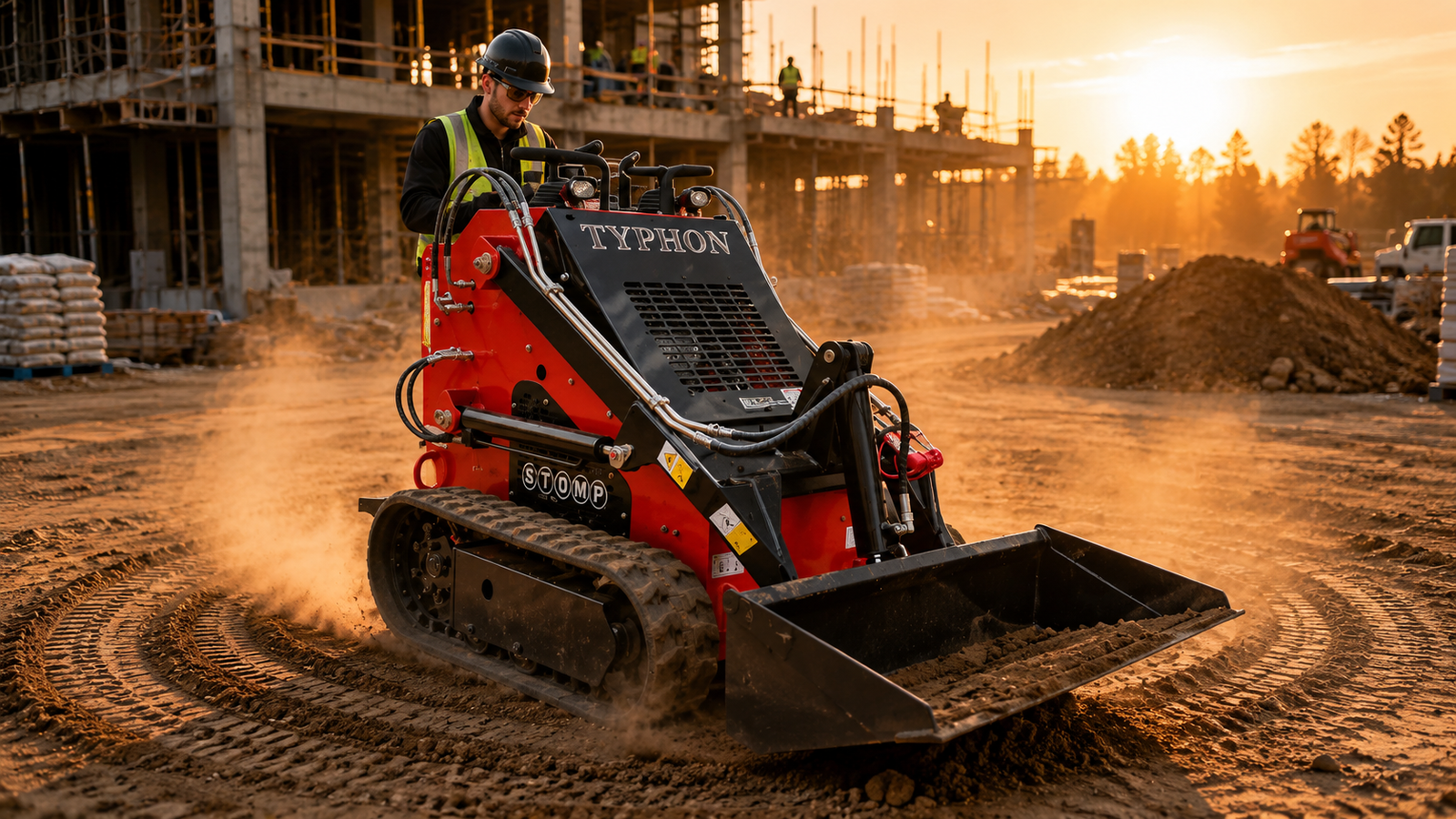
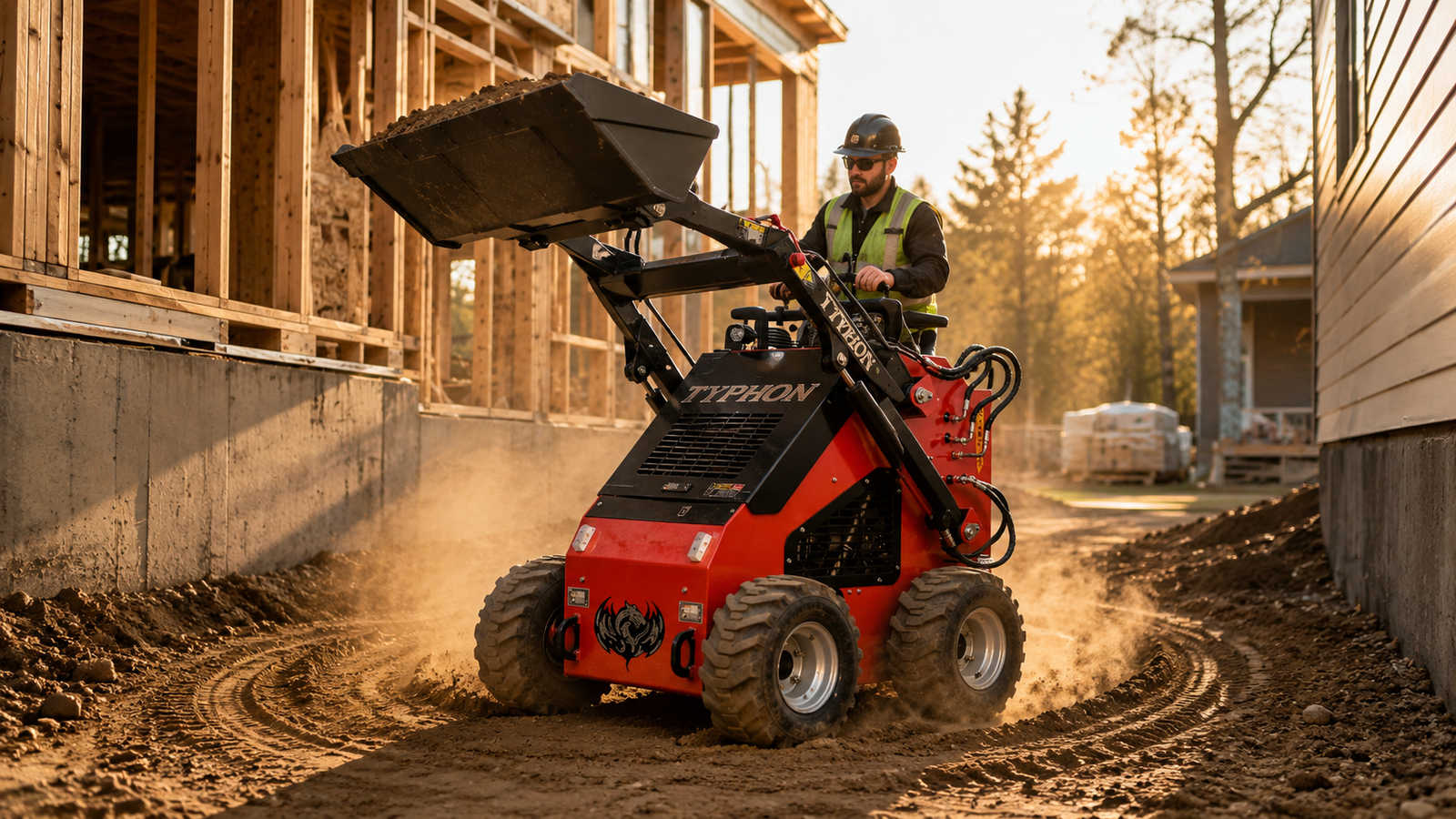
The traditional wheeled skid steer rides on four tires and is well suited to hard, stable surfaces like pavement, concrete, and firm ground. It is generally faster on solid surfaces, easier and less expensive to maintain, and ideal for material handling and work on established sites. Its limitation appears on soft, muddy, or uneven ground, where the tires sink, lose traction, and skid more harshly, and where the concentrated weight on four contact points increases the risk of getting stuck or tearing up the surface. The compact track loader, often grouped under the same skid steer family, replaces the wheels with rubber tracks that spread the machine’s weight across a much larger surface area.
That wider footprint changes the math in important ways. Tracked models deliver lower ground pressure, better flotation on soft terrain, and superior traction, which makes them the better choice for landscaping, work on lawns and unfinished ground, and any site where soft conditions are common. They tend to skid more gently across delicate surfaces and handle slopes and mud with far greater confidence. The trade-off is higher purchase and maintenance costs and slower travel on hard surfaces. For a buyer, the decision comes down to where the machine will spend most of its time, and recognizing that both types steer by skidding, while interacting with the ground very differently, leads to a smarter purchase and more productive work. That same understanding feeds directly into how an operator gets the most from the machine every day.
How Understanding the Machine Makes You Better at Using It
All of this knowledge about names, mechanisms, and surfaces is interesting on its own, but its real worth lies in how it shapes the way you operate the machine. The difference between an average operator and an excellent one often comes down to whether they understand why the machine does what it does, rather than simply memorizing which lever produces which motion. An operator who truly grasps the skidding principle works in harmony with the machine instead of fighting its natural tendencies.
The mistake many operators make is treating the skid steer like a vehicle that should turn smoothly and gently in every situation, then growing frustrated when it scrubs the ground, jerks through a tight pivot, or marks up a finished surface. Without understanding the cause, they either operate too cautiously and lose productivity, or too aggressively and create damage. Both responses come from not knowing what is happening beneath them. The skidding action is predictable once you understand it, and predictability is the foundation of skill.
The correct approach is to let the machine’s design inform every decision. Knowing that turns create skidding, an operator plans movements to favor rolling turns over stationary pivots, slows down on sensitive surfaces, and chooses travel paths that reduce unnecessary direction changes. Knowing how the differential steering responds, the operator makes smooth, deliberate inputs rather than jerky ones, which produces cleaner work and less wear on the drivetrain. The business impact compounds across every job: faster cycle times, less damage to client property, lower repair and tire or track costs, and a finished result that reflects genuine craftsmanship. Understanding the machine is not an academic exercise; it is one of the most direct ways to protect both your equipment and your profitability on every job.
Conclusion
The name “skid steer” is far more than a quirk of industry vocabulary. It describes the precise, ingenious way the machine moves, steering by driving its two sides at different speeds so that the wheels or tracks skid across the ground to turn. That differential steering is exactly what allows the machine to pivot in its own footprint, work in spaces larger equipment cannot reach, and consolidate so many tasks into one compact, versatile platform. The name has endured because it remains accurate for every version of the machine ever built, from nimble wheeled models on hard pavement to tracked loaders gliding across soft ground.
For contractors, landscapers, construction business owners, equipment buyers, and anyone curious about compact equipment, the real value of understanding the name lies in what it teaches about the machine itself. Knowing that the skidding action drives both the machine’s remarkable maneuverability and its effect on the surfaces it crosses helps you choose the right model, operate it with skill, and protect the properties you work on. Take that understanding onto the jobsite, favor smooth and deliberate movements, match the machine to your terrain, and you will get more productivity, less damage, and longer equipment life out of one of the hardest-working machines in the trade. The name tells you exactly how it works, and working with that knowledge is what sets the best operators apart.